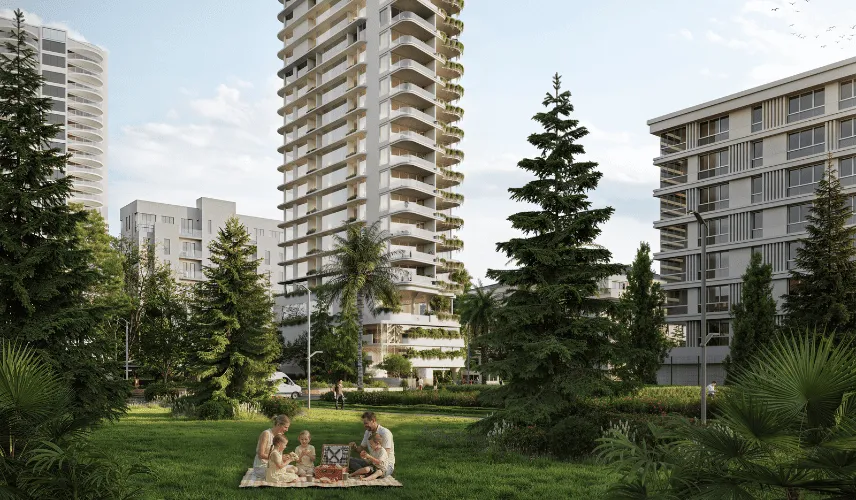
While architectural geometry defines space, it is human presence that gives that space meaning. Whether subtly placed in the background or prominently featured in the foreground, people transform static compositions into immersive environments. The inclusion of human figures significantly enhances both emotional engagement and perceptual clarity in architectural imagery.
Together with MR Rendering, this article examines the role of people in architectural renderings, explores the various techniques available, and outlines best practices for achieving visually compelling and contextually appropriate results.
The Importance of People in Architectural Rendering
To understand the value of people in architectural rendering, it is essential to recognize their multifaceted contribution to visual communication.
First, human figures provide a clear reference for scale. Without people, it can be difficult for viewers especially non-professionals to accurately interpret the size of a building or space. A single figure standing near a structure can instantly clarify proportions and spatial relationships.
Second, people introduce narrative and emotional depth. A rendering of a public plaza populated with pedestrians conveys a completely different impression than an empty one. Activities such as walking, conversing, or relaxing help suggest how the space is intended to be used, thereby making the design more relatable.
Finally, human presence enhances realism. Even the most technically precise rendering may feel artificial if it lacks signs of life. By integrating people thoughtfully, artists can bridge the gap between conceptual design and lived experience.

People in architectural rendering enhance realism and bring spatial narratives to life
Methods of Integrating People in Architectural Rendering
There are several established approaches to incorporating people into architectural visualizations. Each method offers distinct advantages and limitations depending on project requirements, budget, and desired level of realism.
2D Cutout People
The most widely used method involves compositing photographic cutouts of real individuals into renderings during post-production.
This approach is valued for its high level of realism. Because the figures originate from real photographs, they naturally exhibit authentic proportions, textures, and lighting characteristics. When properly matched with the scene’s lighting and perspective, 2D people can seamlessly blend into the composition.
However, this method lacks flexibility. Since the images are static, it is not possible to adjust poses or viewing angles. Additionally, sourcing figures that align perfectly with the camera perspective can be time-consuming.
3D Human Models
Another common technique involves the use of fully modeled 3D characters. These figures can be posed, animated, and adjusted to match any camera angle or lighting condition.
The primary advantage of 3D people lies in their versatility. They are especially useful in projects requiring multiple viewpoints or animations, where consistency across frames is essential. Furthermore, their integration within the 3D environment allows for accurate interaction with lighting and shadows.
On the other hand, achieving photorealism with 3D characters can be challenging. Without careful texturing and rendering, they may appear artificial. As a result, they are often used in background contexts or stylized visualizations.
AI-Enhanced Human Figures
Recent advancements in artificial intelligence have introduced new possibilities for enhancing people in architectural rendering. AI tools can refine facial details, adjust lighting, and even generate entirely new characters tailored to specific scenarios.
This hybrid approach combines the realism of photographic assets with the flexibility of digital manipulation. It allows artists to overcome some of the traditional constraints associated with both 2D and 3D methods.
However, the use of AI requires specialized knowledge and careful implementation to ensure consistency and avoid visual artifacts.
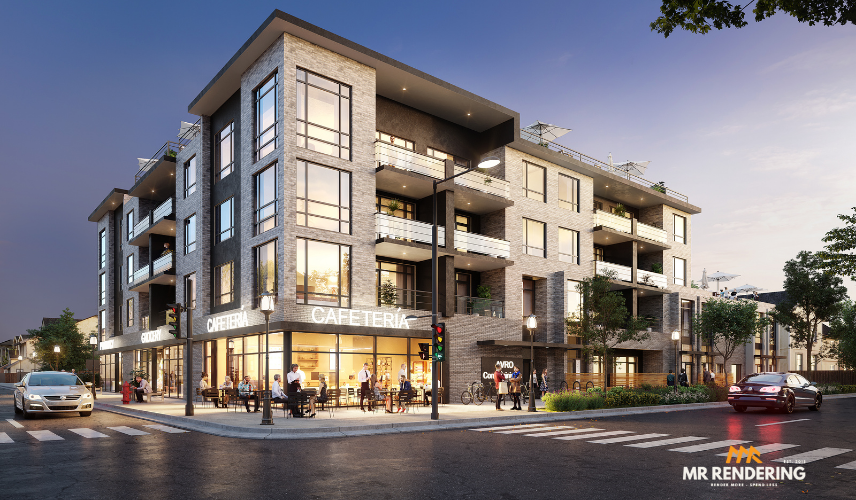
AI-enhanced people improve realism while maintaining creative flexibility
4D Scanned People
At the highest end of the spectrum are 4D scanned human figures. These assets are captured from real individuals in motion, resulting in highly detailed and dynamic representations.
4D people are particularly effective in real-time applications such as virtual reality (VR) and augmented reality (AR), where lifelike movement is essential. Their realism surpasses that of traditional 3D models, making them ideal for premium visualizations.
Nevertheless, the cost and technical requirements associated with 4D assets limit their widespread use.
Creative Techniques for Using People Effectively
Beyond selecting the appropriate method, the way people are presented within a rendering can significantly influence the final outcome.
One commonly used technique is motion blur. By subtly blurring moving figures, artists can convey a sense of activity and dynamism, particularly in urban or commercial environments.
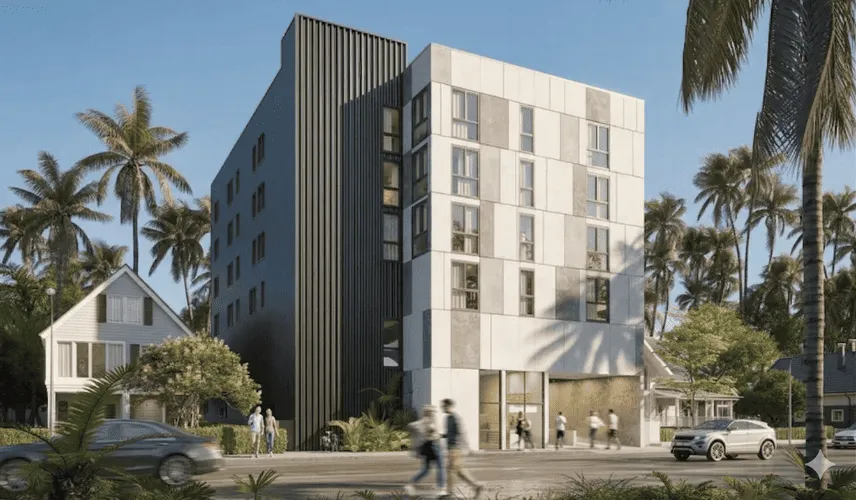
Motion blur techniques convey movement and liveliness in architectural scenes
Another approach involves adjusting opacity. Semi-transparent figures can suggest presence without distracting from the architectural design, making them suitable for concept presentations.
Additionally, careful placement of people can guide the viewer’s attention. Foreground figures often act as focal points, while background figures contribute to atmosphere and depth.
These techniques demonstrate that people in architectural rendering are not merely decorative elements but integral components of visual storytelling.
Types of People Used in Architectural Animation
In animated visualizations, the selection of human figures becomes even more critical.
Static or “posed” characters are useful for background scenes where minimal movement is required. Ambient animated figures, such as walking pedestrians, add subtle motion and realism without overwhelming the composition.
For more interactive scenarios, rigged characters allow for complex movements and interactions. In high-end productions, 4D scanned people provide the most realistic motion, enhancing immersion.
Combining different types of characters within a single animation can create a balanced and believable environment.
When to Avoid Using People in Renderings
Despite their many advantages, there are situations where excluding people may be appropriate.
In conceptual presentations, the focus often lies on form, materiality, and lighting. Introducing human figures in such cases may distract from the core design elements.
Similarly, minimalistic visualizations sometimes benefit from the absence of people, as this can create a more refined and abstract aesthetic.
Ultimately, the decision should be guided by the intended purpose of the rendering.
The integration of people in architectural rendering is both an artistic and strategic decision. When used effectively, human figures enhance realism, clarify scale, and enrich storytelling.
From traditional 2D cutouts to advanced 4D scanned assets, each method offers unique advantages. The key lies in selecting the approach that best aligns with the project’s goals and audience expectations.

Content Writer, Copy Writer
Thao Nguyen is a content writer specializing in 3D rendering, with a strong focus on translating complex visual and technical concepts into clear, engaging content. Through carefully crafted narratives, Thao highlights the creative value and practical impact of 3D visualization, helping audiences better understand and connect with the work behind each image.