In today’s home construction industry, clients expect more than technical drawings and written specifications. They want clarity, confidence, and a clear understanding of what their future home will look like before construction begins. This is where 3D rendering for home construction has become an essential part of the design and building process.
By transforming architectural plans into realistic visual representations, 3D rendering helps bridge the gap between technical intent and client perception. It allows homeowners, builders, and designers to communicate more effectively, reduce uncertainty, and make informed decisions early in the project lifecycle.
The Limitations of Traditional Drawings in Home Construction Without 3D Rendering
Technical drawings remain a critical part of construction documentation, but they are not always effective communication tools for non-professionals. Floor plans, elevations, and sections require a certain level of spatial understanding that many homeowners simply do not have. As a result, clients may approve designs without fully grasping scale, proportions, or how different elements will come together.
This often leads to misunderstandings later in the project. A space that looked adequate on paper may feel too small in reality, or a façade that seemed appealing in elevation may not match the client’s expectations once built. These issues frequently result in design revisions during construction, causing delays and additional costs.
3D rendering for home construction addresses this challenge by converting abstract drawings into clear, visual experiences that anyone can understand.
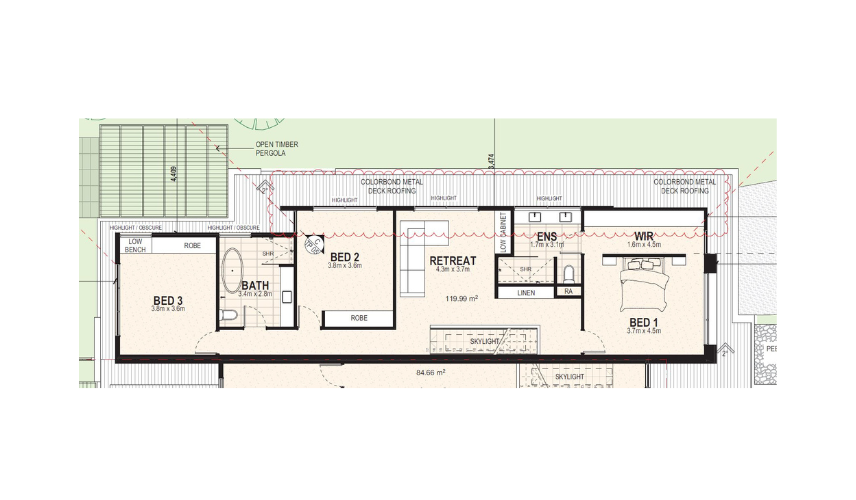
3D home rendering overcomes the limitations of 2D drawings
How 3D Rendering for Home Construction Helps Clients Visualize Their Future Home
One of the most significant advantages of 3D rendering is its ability to present a home as a complete, cohesive environment. Instead of interpreting lines and dimensions, clients can see the building’s form, layout, and character as if it already exists.
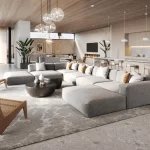
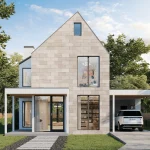
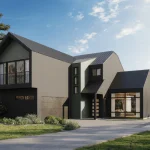
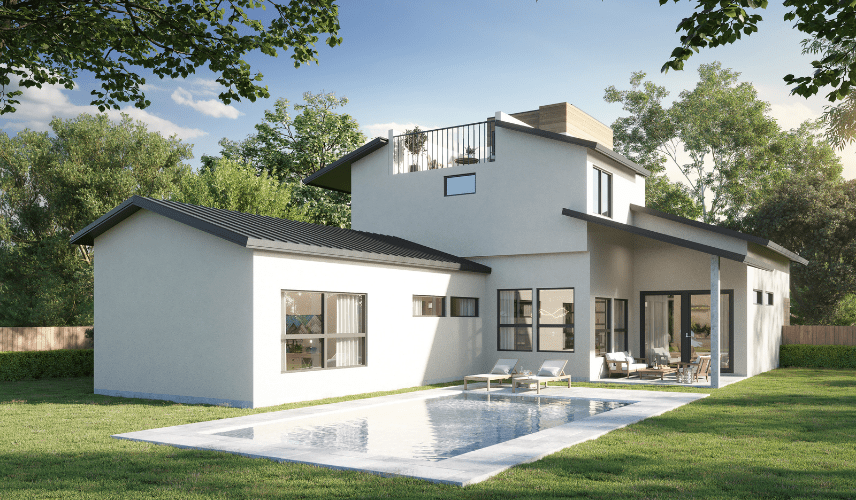
Exterior renderings show how the house will sit on the site, how volumes relate to one another, and how the architecture interacts with its surroundings. Interior renderings allow clients to experience room proportions, ceiling heights, and spatial flow. This clarity helps homeowners feel confident in their decisions and reduces hesitation during design approval stages.
When clients clearly understand what they are investing in, trust in the builder and design team naturally increases.
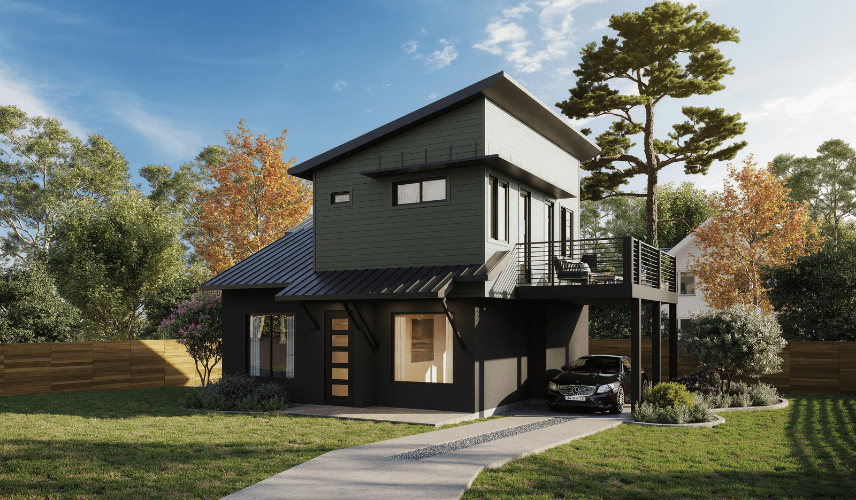
High-quality 3D rendering for home construction helps homeowners clearly visualize their future house before building begins.
Visualizing materials and finishes in real-world context
Material and color selection is one of the most critical and challenging aspects of home construction. Samples viewed in isolation rarely reflect how materials will appear when applied across an entire building. Lighting conditions, surrounding colors, and textures all influence perception.
Through 3D rendering for home construction, materials and finishes can be visualized in realistic lighting and environmental conditions. Clients can see how exterior cladding interacts with natural daylight or how interior finishes look under artificial lighting in the evening. This context-driven visualization makes it easier to evaluate combinations and choose finishes that align with the desired aesthetic.
As a result, decisions are made earlier and with greater certainty, reducing the likelihood of costly changes during construction.
Exploring design options without slowing down the project
Homeowners often want to compare multiple design alternatives before finalizing their choice. This may include variations in facade design, roof forms, window configurations, or interior layouts. Producing and explaining these options using traditional drawings can be time-consuming and inefficient.
3D rendering makes this process significantly more flexible. Design variations can be presented visually, allowing clients to compare options side by side and immediately understand the differences. Adjustments can be discussed and refined more efficiently, keeping the project moving forward without compromising design quality.
This adaptability is particularly valuable in custom home construction, where personalization plays a major role in client satisfaction.
Demonstrating lighting and atmosphere throughout the day
A home’s atmosphere changes dramatically depending on the time of day and lighting conditions. Natural light, shadows, and artificial illumination all contribute to how a space feels, yet these elements are difficult to communicate through drawings alone.
With 3D rendering for home construction, lighting scenarios can be accurately simulated. Clients can see how sunlight enters living spaces in the morning, how shadows affect exterior forms in the afternoon, and how interior lighting creates ambiance at night. This level of detail helps homeowners understand not just the layout of a house, but how it will feel to live in it.
Such insights are invaluable when making decisions about window placement, lighting design, and overall spatial planning.
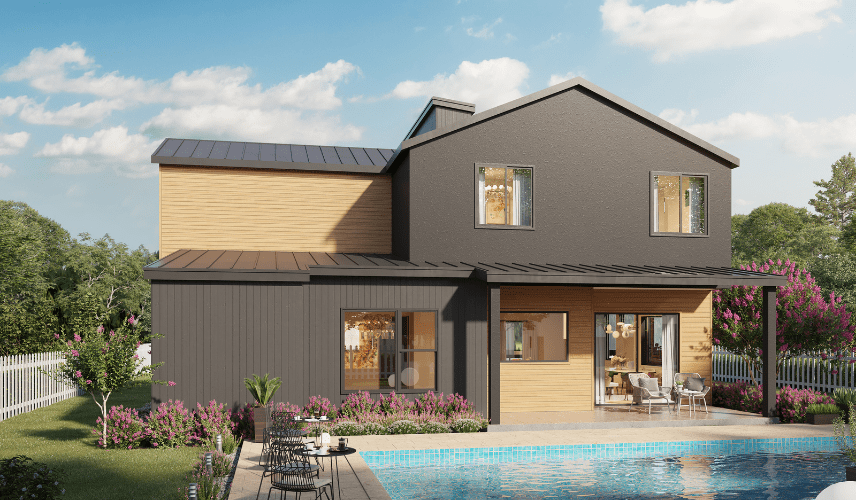
Daytime lighting simulation using 3D rendering for home construction to show natural light behavior
Strengthening presentations and marketing for home builders
Beyond design communication, 3D rendering has become a powerful marketing asset for home builders and developers. High-quality renderings elevate presentations, making proposals more engaging and professional. They help projects stand out in a competitive market where first impressions matter.
Whether used for client presentations, online listings, or promotional materials, realistic visuals enhance credibility and showcase the builder’s attention to detail. In many cases, strong visuals can significantly shorten the decision-making process and increase the likelihood of project approval.
For builders aiming to position themselves as modern, client-focused professionals, 3D rendering for home construction is no longer optional, it is a strategic advantage.
| See how 3D renderings elevate presentations and drive marketing impact
Reducing construction risks through early visualization
Clear visualization during the design phase helps identify potential issues before construction begins. Proportional inconsistencies, awkward spatial relationships, or material clashes can be detected early and resolved without affecting the build schedule.
By minimizing design changes during construction, 3D rendering contributes to better cost control and smoother project execution. This proactive approach benefits both builders and clients, leading to more predictable outcomes and fewer disputes.
In this sense, 3D rendering is not just a visual tool, but a risk-management asset within the home construction process.
MR Rendering – Professional 3D rendering for home construction projects
As demand for high-quality visualization continues to grow, working with a specialized rendering partner becomes increasingly important. MR Rendering provides professional 3D rendering for home construction, focusing on realism, accuracy, and clear communication of design intent.
With experience supporting residential builders and designers, MR Rendering understands the technical requirements behind architectural drawings as well as the expectations of homeowners. Each rendering is developed to reflect real construction conditions, ensuring visuals are not only visually appealing but also practical and reliable for project planning and marketing.
From exterior perspectives to detailed interior views, MR Rendering helps transform architectural concepts into compelling visuals that support confident decision-making and successful home construction projects.
Explore our services here.

Content Writer, Copy Writer
Thao Nguyen is a content writer specializing in 3D rendering, with a strong focus on translating complex visual and technical concepts into clear, engaging content. Through carefully crafted narratives, Thao highlights the creative value and practical impact of 3D visualization, helping audiences better understand and connect with the work behind each image.