In today’s landscape architecture industry, the ability to visualize ideas clearly is an essential factor in delivering successful projects. 3D landscape rendering services transform concepts into realistic, vivid visual representations, allowing clients and stakeholders to fully understand the intended space. In the article below, let’s explore with MR Rendering how 3D landscape rendering enhances design accuracy, improves communication, and adds greater value to landscape architecture projects.
What is 3D landscape rendering?
3D landscape rendering is the process of modeling and visualizing outdoor environments using advanced 3D graphics technology. Through specialized modeling software, the entire space from terrain, greenery, water features, walkways, and plazas to auxiliary structures is recreated with high accuracy in terms of scale and materials.
Unlike traditional 2D drawings, which only present plans or elevations, 3D landscape rendering offers a multi-dimensional spatial experience. Viewers can observe the project from various angles and even simulate different times of day to see how lighting and shadows change.
This process not only serves presentation purposes but also helps evaluate the feasibility of a design. Thanks to detailed simulation, landscape elements and the relationship between architecture and its surrounding environment can be carefully reviewed before construction begins.
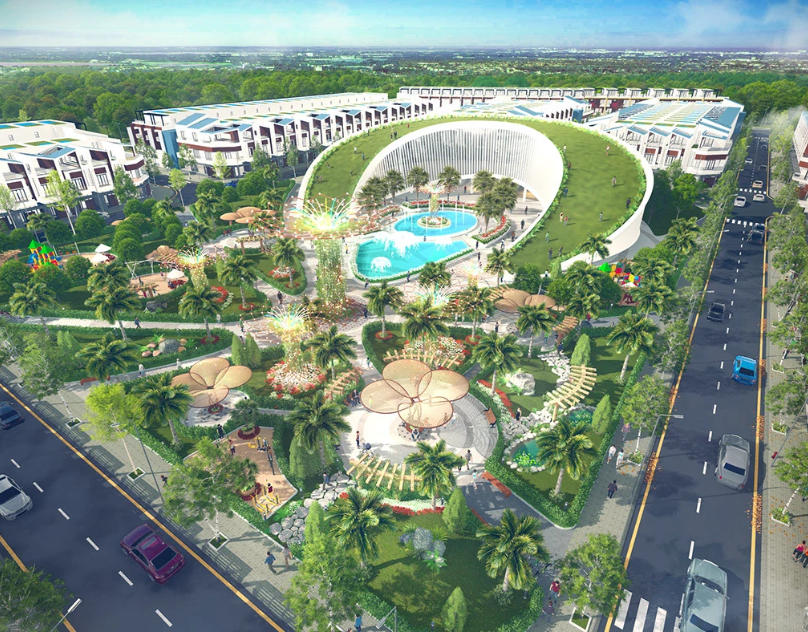
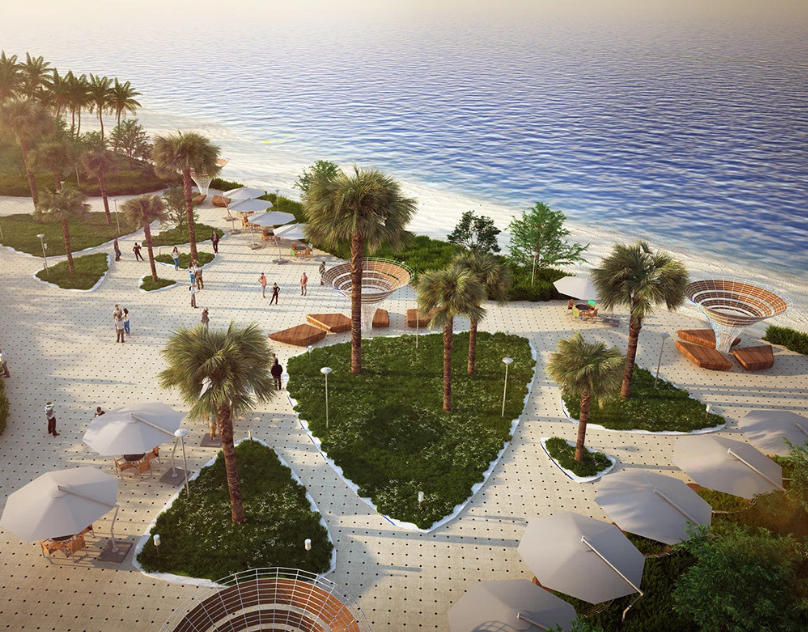
3D landscape rendering showcasing a contemporary urban park design with sustainable green spaces, water elements, and modern infrastructure.
The role of 3D landscape rendering in modern architecture
In an increasingly competitive market, visual imagery is more powerful than ever. 3D landscape rendering plays a crucial role in many areas, including:
Luxury villas and high-end residential projects
Urban developments and master planning projects
Resorts, hotels, and leisure complexes
Public parks, plazas, and community spaces
Commercial projects and shopping centers
With high-quality 3D landscape rendering, developers can present their projects professionally to clients, partners, and investors. This not only increases persuasiveness but also shortens decision-making time.
Key benefits of 3D landscape rendering
Clear and realistic spatial visualization
One of the most significant advantages of 3D landscape rendering is its ability to depict future spaces with near-realistic accuracy. Instead of relying on flat 2D plans or technical symbols that are difficult to interpret, viewers can experience the entire landscape through dynamic three-dimensional perspectives.
Every detail such as lawns, tree lines, paved walkways, water features, decorative elements, and lighting systems is clearly represented in terms of color, material, and illumination. Viewers feel as if they are truly experiencing the space, observing it from multiple viewpoints, from pedestrian eye level to aerial overviews.
Realistic 3D perspectives allow viewers to experience the outdoor space from multiple angles.
High accuracy and flexibility in adjustments
3D landscape rendering allows precise control over even the smallest details. From plant species, canopy height, and material colors to lighting fixture designs, everything can be quickly adjusted in a digital environment.
If a concept proves unsuitable, designers can test multiple alternatives before finalizing the design. This helps minimize risks and optimize overall costs.
Improved communication between stakeholders
In landscape projects, coordination among architects, infrastructure engineers, contractors, and developers is critical to achieving a high-quality outcome. 3D landscape rendering acts as a shared visual language, enabling all parties to reference the same clear image rather than relying on individual interpretations.
Technical aspects such as ground levels, drainage slopes, spacing between functional zones, and green area distribution are clearly illustrated in the 3D model. As a result, potential issues can be identified early and addressed before construction begins.
Better budget and schedule control
With detailed modeling capabilities, 3D landscape rendering supports more accurate estimation of material quantities and construction scope. From paving areas and plant quantities to irrigation systems and lighting equipment, all components can be calculated based on a concrete model.
This helps investors develop budgets that closely reflect reality, reducing the risk of cost overruns caused by inaccurate initial estimates. In addition, early detection of design conflicts such as clashes between technical systems and planting areas prevents costly changes during construction.
Enhanced marketing value
In real estate and project development, high-quality 3D landscape visuals are an exceptionally powerful marketing tool. These vivid renderings not only show physical spaces but also convey lifestyle, atmosphere, and the overall value of a project.
3D landscape renderings can be used across multiple platforms, including brochures, websites, social media, and promotional videos, helping strengthen brand image and increase conversion rates.
Future trends in 3D landscape rendering
Sustainable and ecological design
Sustainability has become a core standard in modern landscape architecture. As a result, 3D landscape rendering now goes beyond aesthetic simulation to integrate ecological and environmental factors from the concept stage.
Contemporary renderings often highlight the use of native plants to reduce irrigation and maintenance needs, green roofs to improve microclimates, rainwater harvesting solutions, and energy-efficient lighting systems. Some projects even simulate plant growth over time to assess long-term landscape impact.
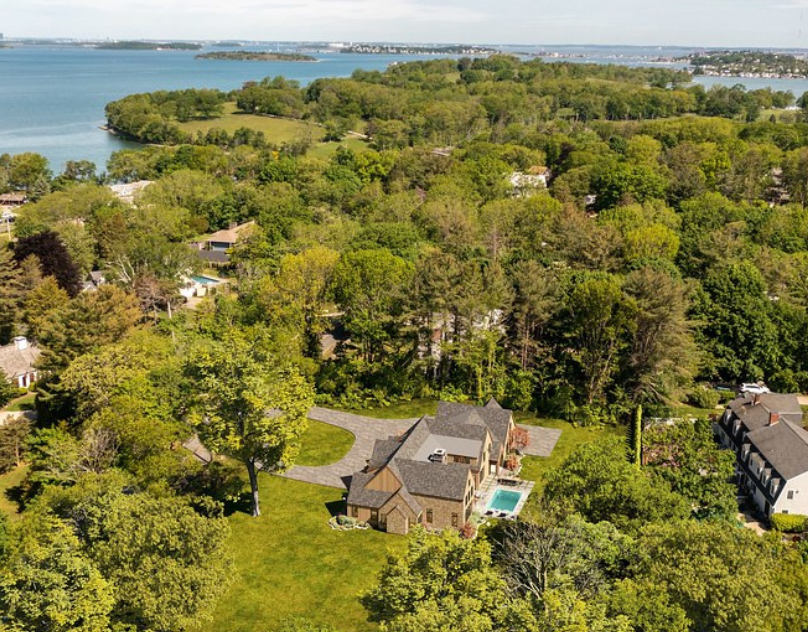
3D landscape rendering integrates sustainable strategies such as native planting, green roofs, and water-saving solutions.
Cinematic realism
Another prominent trend is a cinematic rendering style. Rather than focusing solely on technical accuracy, modern 3D landscape rendering place greater emphasis on emotion and visual storytelling.
This approach allows viewers not only to see the space but also to feel its atmosphere. As a result, renderings become powerful storytelling tools, particularly effective in high-end real estate marketing and resort developments.
360° experiences and virtual reality
With technological advancements, 3D landscape rendering is expanding into interactive experiences such as 360° panoramas and virtual reality (VR) walkthroughs. Instead of viewing static images from fixed angles, clients can rotate perspectives, move through the space, and explore each landscape area interactively. This increases transparency and accelerates decision-making.
Essential elements of high-quality 3D landscape rendering
Level of detail
Detail is what distinguishes an ordinary image from a truly convincing rendering. As an exterior visualization, viewers expect to see everything from overall composition to close-up details. This includes paving textures, wall surface roughness, grass edges, planter borders, and the shape and density of tree canopies.
A professional rendering studio must thoroughly understand the design drawings before starting. They need to grasp the overall concept, architectural style, and project spirit to ensure the landscape harmonizes seamlessly with the built environment.
Lighting and shadows
Lighting is a decisive factor in realism. At first glance, lighting should feel natural and appropriate for the intended time of day. This includes accurate shadow casting, ensuring light angles and shadows correspond correctly.
Human presence
Adding people to renderings enhances liveliness and provides a sense of scale. However, this element requires careful handling. Characters must blend naturally with the overall lighting, color tones, and contrast of the environment.
More importantly, their placement and actions should make sense within the context. People in the scene should help tell the story of how the space is intended to be used.
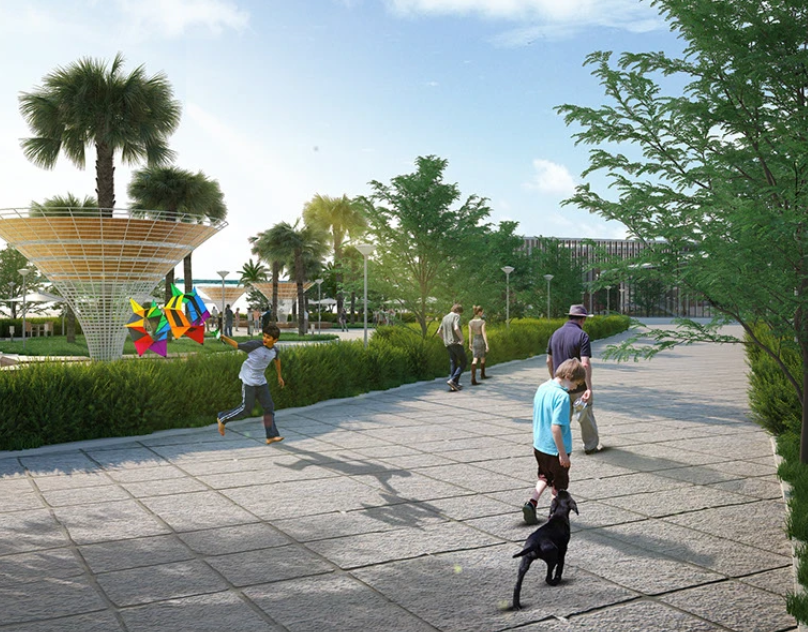
Human figures add life and scale, helping viewers understand how the landscape is experienced and used
Professional 3D landscape rendering services from MR Rendering
At MR Rendering, we provide professional 3D landscape rendering services focused on recreating outdoor spaces with realism, precision, and emotional depth. We work closely with clients throughout the entire process, offering flexible adjustments to achieve the most optimal solution. From residential gardens to large-scale developments, MR Rendering is committed to delivering highly persuasive 3D visuals that effectively support presentations and project marketing.
In particular, with our professional 3D rendering outsourcing model, clients can significantly optimize internal resources, shorten project timelines, and save up to 60% in costs compared to building an in-house team. This solution allows businesses to focus on their core strengths while maintaining high-quality outputs and reliable project progress.
Discover our services HERE.

Content Writer, Copy Writer
Thao Nguyen is a content writer specializing in 3D rendering, with a strong focus on translating complex visual and technical concepts into clear, engaging content. Through carefully crafted narratives, Thao highlights the creative value and practical impact of 3D visualization, helping audiences better understand and connect with the work behind each image.